

Texas Registration Renewal is required for most registered vehicles in the state before the current registration reaches its expiration date. Completing the registration renewal on time helps maintain an active vehicle registration, keeps state records accurate, and allows the vehicle to continue operating legally on Texas roads. The renewal process may be completed through several approved methods, including online services, mail, county tax offices, or participating retail locations. Each option follows specific eligibility requirements, which are explained throughout this page. Staying aware of the registration expiration date helps prevent unnecessary delays and keeps the renewal process simple.
A current vehicle registration serves as proof that a vehicle remains properly registered with the State of Texas. During the renewal process, vehicle owners may need to meet certain renewal requirements, such as maintaining valid insurance, completing any applicable inspection requirements, and submitting the required payment. Once the renewal is processed, the state issues a new registration sticker showing the updated registration period. Renewing before the registration expiration date helps avoid interruptions, supports accurate vehicle records, and allows drivers to continue using their vehicles with confidence.
How to Renew Texas Registration
Texas Registration Renewal can be completed through four approved methods: online, by mail, in person at a county tax office, or at participating retail locations. Each renewal method has different requirements, payment options, and processing steps based on the vehicle owner’s eligibility. Texas License Resources can help vehicle owners understand these renewal options and prepare the required information before starting the process. Vehicle owners can select the renewal option that fits their situation while keeping their vehicle registration active. The correct method depends on factors such as renewal eligibility, available documents, payment preference, and the time remaining before the registration expiration date.
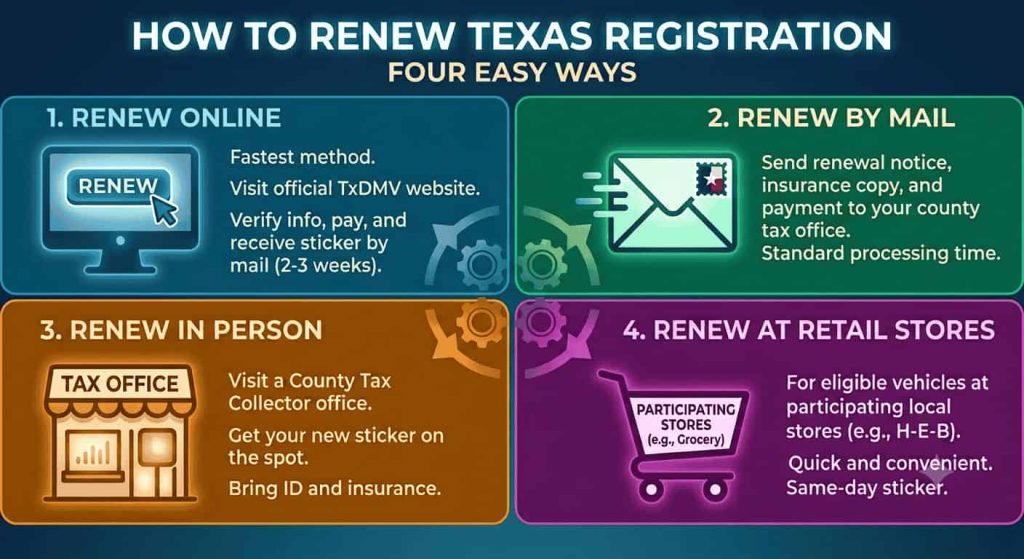
Renew Texas Registration Online
Texas Registration Online allows eligible vehicle owners to renew their vehicle registration electronically without visiting a county office. This online renewal option provides a faster way to submit registration information, complete payment, and receive a renewal confirmation.
Follow these steps to complete the online registration renewal:
- Visit the official Texas DMV online renewal portal: https://renew.txdmv.gov/
- Enter the requested vehicle information from the renewal notice.
- Provide license plate and registration details when requested.
- Review the vehicle information displayed by the system.
- Confirm the renewal details and total amount due.
- Complete payment using an approved digital payment method.
- Save the transaction details after receiving the renewal confirmation.
After successful payment, the renewal request is submitted for processing. The updated registration sticker is mailed to the address listed on the vehicle record.
Eligibility for Online Renewal
Before starting the online renewal process, the vehicle record must qualify for electronic processing. Eligibility may depend on:
- Current vehicle registration status
- Available renewal record
- Required inspection information, when applicable
- Active insurance information
- County registration requirements
If the vehicle qualifies, the system allows the owner to continue with the renewal request. If online renewal is unavailable, the system may direct the user to another renewal option.
Payment and Renewal Confirmation
Online payments are completed electronically through approved payment methods. After the transaction is accepted, users receive a renewal confirmation showing that the request was submitted successfully. Vehicle owners should keep the confirmation details until the new registration sticker arrives. The confirmation can help verify the transaction if there is a delay in receiving updated registration materials.
Renew by Mail
Vehicle owners can renew Texas registration by mail if their vehicle qualifies for this option. Mail renewal allows the registration request to be completed without visiting a county tax office. This method is useful for people who prefer sending their renewal documents through postal mail or cannot complete an online renewal.
Mailing Package Requirements
A complete renewal package usually includes:
- Renewal notice received from the county
- Required vehicle registration information
- Payment for renewal fees
- Additional documents if requested
The renewal package should be reviewed carefully before mailing. Missing information or incorrect payment can delay the processing time. Vehicle owners should send the package to the county tax office address provided on the renewal notice. Sending the renewal request before the expiration date allows sufficient time for delivery and processing.
Payment and Processing
Mail renewal payments must be submitted using an accepted payment method listed by the county office. After receiving the package, the county reviews the information and processes the renewal request. Processing time depends on mail delivery speed, document accuracy, and county workload. Once the renewal is completed, the updated registration sticker is mailed to the registered address.
Renew In Person
Texas License Plate Renewal can be completed in person by visiting a county tax office that provides vehicle registration services. This option allows vehicle owners to receive assistance directly from registration staff. An in-person renewal may be helpful when online renewal is unavailable, additional documents are required, or the owner needs clarification about the renewal process.
Visit a County Tax Office
Before visiting a county tax office, vehicle owners should check the office location, operating hours, and accepted payment methods. County tax offices handle registration renewal requests and update vehicle records after reviewing the required information.
Documents Required for In-Person Renewal
Vehicle owners should bring the necessary documents to complete the renewal, which may include:
- Renewal notice, if available
- Current vehicle registration information
- Proof of insurance when required
- Valid identification
- Renewal payment
Having the correct documents ready helps reduce waiting time and prevents processing delays.
Payment Process
County offices accept approved payment methods based on local office policies. After the payment is completed, the renewal request is processed, and updated registration materials are provided according to the office procedure.
Renew at Participating Retail Locations
Vehicle owners may renew Texas license plate registration at participating retail locations that provide Texas registration services. This option offers a convenient alternative for eligible renewals without visiting a county tax office. Participating grocery stores and retail partners allow customers to complete certain registration renewal transactions during regular business hours.
Grocery Stores and Retail Partners
Retail renewal locations may include approved grocery stores and other participating businesses. These locations provide registration services for eligible vehicles and process renewal payments electronically.
Before visiting a retail location, vehicle owners should confirm that:
- The location provides Texas registration renewal services
- The vehicle qualifies for retail renewal
- Required renewal information is available
Convenience of Retail Renewal
Retail renewal services provide a simple option for routine registration updates. Customers can complete payment, receive a transaction receipt, and submit the renewal request through an approved partner location. After processing is completed, the updated registration sticker is provided according to the applicable delivery process.
When Should You Renew Texas Vehicle Registration?
Texas Registration Renewal should be completed before the vehicle’s current registration expiration date to keep the registration active for the next period. Texas vehicle owners can renew during the approved renewal window, which begins before the expiration month shown on the vehicle registration record and sticker. The renewal timeline gives vehicle owners time to review the renewal notice, confirm their vehicle information, and complete the renewal request before the listed due date. Planning the renewal before the deadline helps provide enough time for processing, payment, and delivery of updated registration materials.
Texas Registration Renewal Window and Due Date
The Texas registration renewal window usually opens before the current registration expires. Most vehicle owners receive a renewal notice from their county tax office approximately 90 days before the registration expiration date. This notice provides the renewal information needed to complete the process, including the vehicle details and renewal due date.
The renewal notice may include:
- Vehicle registration information
- License plate details
- Registration expiration date
- Renewal fee information
- Available renewal instructions
The due date for Texas Registration Renewal is the expiration date shown on the current registration record. Vehicle owners should complete the renewal before this date to maintain a current registration status.
Registration Period and Expiration Month
A Texas vehicle registration is typically valid for 12 months after renewal. The new registration period begins after the current registration expires and continues for the next yearly cycle. The expiration month is displayed on the vehicle registration sticker and indicates the month when the active registration period ends. For example, if a vehicle registration sticker shows an expiration date of March 2027, the vehicle registration remains valid through the last day of March 2027.
Vehicle owners should check their registration sticker and renewal notice regularly to identify the correct renewal timeline. Completing the renewal before the expiration month ends allows the next registration period to begin without interruption and helps ensure the updated registration sticker is issued on time
Texas Registration Renewal Requirements
Texas Registration Renewal requirements determine whether a vehicle is eligible for renewal before the registration request is submitted. Vehicle owners must have accurate vehicle records, meet state conditions, and prepare the required information before starting the renewal process. Before requesting a registration renewal, vehicle owners should verify that their vehicle record is active and that all required details are current. Checking these requirements in advance helps prevent issues caused by missing information, outdated records, or incomplete renewal details.
Vehicle Eligibility for Texas Registration Renewal
A vehicle must meet registration eligibility conditions before it can be renewed. The vehicle record should match the information maintained by the Texas Department of Motor Vehicles and the county registration system.
Vehicle eligibility may depend on:
- Current registration status
- Accurate vehicle information
- Compliance with state registration requirements
- Availability of required records
Insurance and Vehicle Inspection Requirements
Active insurance coverage is required for registered vehicles in Texas. Vehicle owners should confirm that their insurance information is current before requesting renewal. A vehicle inspection record may be required for eligible vehicles before registration renewal. When an inspection applies, the completed inspection information must be available in the state system.
Before renewal, vehicle owners should check:
- Insurance status
- Inspection completion status
- Vehicle record accuracy
Renewal Notice and Required Documents
A renewal notice provides important registration details before the renewal period begins. It may include information such as vehicle details, registration information, and renewal instructions. Vehicle owners should keep their renewal notice available and review the information carefully. Required renewal documents may vary depending on the vehicle record and renewal situation.
Common information needed before renewal may include:
- Vehicle registration details
- License plate information
- Owner information
- Payment information
Payment Readiness and Mailing Address
Vehicle owners should prepare an approved payment method before submitting a renewal request. Having payment information ready helps avoid interruptions during the registration renewal process. The mailing address connected to the vehicle record should remain accurate. A current address helps ensure that official registration communications are sent to the correct location. Reviewing these Texas registration renewal requirements before renewal helps vehicle owners confirm eligibility and prepare the necessary information without delays.
Texas Registration Renewal Fees
Texas Registration Renewal fees include the state registration charge, county fees, and other applicable costs required to renew a vehicle registration. The total renewal amount varies based on the vehicle type, county of registration, and additional fees that apply to the vehicle record. The final renewal payment is calculated by combining the required registration charges with any applicable local or service-related fees. Vehicle owners can find the exact amount listed on their renewal notice or official registration renewal record.
Base Texas Registration Fee
The standard registration fee depends on the vehicle category. For most passenger vehicles and light trucks weighing 6,000 pounds or less, the base registration fee is $50.75. Texas adds a $1 TexasSure fee, making the standard state registration amount $51.75 for many vehicles.
Other common base registration fees include:
| Vehicle Type | Base Registration Fee |
|---|---|
| Passenger vehicles and light trucks up to 6,000 lbs | $50.75 |
| Pickup trucks 6,001–10,000 lbs | $54.00 |
| Motorcycles and mopeds | $30.00 |
| Trailers up to 6,000 lbs | $45.00 |
County Fee and Local Charges
A county fee is an additional charge that may apply based on where the vehicle is registered. Local fees are determined by the county and can vary across Texas.
County charges may include fees related to:
- Road and bridge programs
- Transportation projects
- Child safety programs
The local fee amount can range from $0 to $31.50, depending on the county and applicable local charges.
Processing and Handling Fee
Texas registration renewal may include a processing and handling fee that covers administrative services connected with registration processing, renewal notices, registration stickers, and related materials. The standard processing and handling fee listed by TxDMV is $4.75.
Other Applicable Renewal Charges
Some vehicles may have additional charges depending on their registration category or requirements. These may include:
- Inspection replacement fee: $7.50 when applicable
- Emissions inspection fee: $2.75 when applicable
- Electric vehicle fee: $200 annually for eligible fully electric vehicles
These charges do not apply to every vehicle and depend on vehicle type and registration requirements. Before completing a Texas Registration Renewal, vehicle owners should review the complete fee breakdown shown on their renewal notice. The listed amount provides the most accurate total because county fees and vehicle-specific charges can change the final registration cost.
How Long Does Texas Registration Renewal Take?
Texas Registration Renewal processing time depends on the time required to update the vehicle record, confirm the renewal request, and deliver the new registration materials. The total timeframe can vary based on the renewal method, county processing schedule, and delivery time for the updated registration sticker. After a renewal request is received, the registration system updates the vehicle record and provides a transaction confirmation. Vehicle owners can monitor their registration status after submission to verify that the renewal has been received and processed.
Texas Registration Renewal Processing Time
The processing time for Texas Registration Renewal is different for each renewal method. Electronic submissions are typically received faster because the request enters the registration system immediately after completion.
Processing time may depend on:
- County processing schedules
- Accuracy of registration information
- System updates
- Delivery time for registration materials
A completed renewal request does not always mean the new sticker arrives immediately. The registration record must be updated before the sticker is produced and sent.
Registration Confirmation and Status Updates
After a successful renewal request, vehicle owners receive a confirmation showing that the transaction was submitted. Keeping this confirmation helps verify the renewal request if the updated registration information is not visible immediately. The registration status may take some time to reflect the completed renewal. Checking the status after processing allows vehicle owners to confirm that the registration record has been updated.
Registration Sticker Delivery Time
After the renewal is processed, the new registration sticker is sent to the mailing address listed on the vehicle record. Delivery time depends on postal service timing and when the sticker is released after processing. Vehicle owners should allow enough time for sticker delivery after receiving renewal confirmation. Keeping the mailing address current helps prevent delays in receiving updated registration materials.
What Happens If Your Texas Registration Expires?
Registration expiration means a vehicle’s active Texas registration period has ended and the vehicle record is no longer current. An expired registration may require a late renewal process before the vehicle can return to an active registration status. A vehicle owner should address an expired registration as soon as possible to update the vehicle record and restore valid registration. The steps required after expiration depend on the length of time the registration has been inactive and the vehicle’s current status.
Late Renewal After Registration Expiration
A late renewal occurs when a vehicle owner renews registration after the active registration period has ended. The vehicle may still need to meet the standard Texas registration requirements before the renewal can be completed.
During a late renewal situation, vehicle owners may need to:
- Confirm current vehicle registration information
- Review any additional requirements
- Complete the renewal request
- Pay applicable charges connected with the renewal
Driving With Expired Registration
Driving a vehicle with expired registration can create issues because Texas law requires vehicles operated on public roads to maintain valid registration. Law enforcement officers may check registration status during traffic stops or other situations.
An expired registration may affect:
- Vehicle registration status
- Ability to legally operate the vehicle
- Compliance with Texas vehicle laws
Possible Registration Penalties
A registration penalty may apply when a vehicle registration remains expired. The amount and type of penalty can depend on the situation, including how long the registration has been inactive and applicable state or local rules.
Possible consequences may include:
- Additional charges during renewal
- Citations related to expired registration
- Restrictions connected with vehicle registration status
Reinstatement After Expired Registration
In some situations, a vehicle with expired registration may require reinstatement before it can return to active status. Reinstatement may involve updating registration information, meeting current requirements, and completing any required renewal actions. Vehicle owners should review their registration status and confirm what is needed to restore an active record. Addressing registration expiration quickly helps maintain accurate vehicle records and supports continued compliance with Texas registration requirements.
How to Check Your Texas Registration Renewal Status
Texas registration status allows vehicle owners to confirm whether their renewal request has been received, processed, or updated in the state system. Checking the status helps verify the progress of a renewal request and provides updates before the new registration sticker arrives. After submitting a Texas Registration Renewal request, vehicle owners can review their registration status through available state and county services. A status check can help confirm that the information has been recorded correctly and that the renewal is moving through the processing stage.
Online Registration Status Lookup
Vehicle owners can use official online services to check their current registration information and renewal progress. The online lookup may display available details related to the vehicle record, including registration updates and current status information.
A status check may help confirm:
- Renewal request information
- Current registration record
- Processing updates
- Registration validity details
Keeping the renewal confirmation after submitting a request can help match the transaction details with the status information shown online.
Processing Status and Sticker Tracking
The processing status shows whether a registration renewal request has been received and updated. Status information may not appear immediately after submission, as the system may require time to process the transaction. Vehicle owners can track the progress of their updated registration sticker after the renewal record has been completed. The sticker delivery timeline depends on processing completion and mailing time.
County Office Assistance
If registration information is not updated or the status cannot be confirmed online, vehicle owners can contact their county tax office for assistance. County offices can help verify registration records and provide information about pending updates. Checking registration status regularly helps vehicle owners confirm that their renewal information is accurate and that updated registration materials are being processed correctly.
Texas Registration Renewal Issues
Texas Registration Renewal issues can happen when required information is missing, records do not match, or updated materials are delayed. Identifying the cause of a problem helps vehicle owners resolve registration concerns and keep their vehicle records accurate. Most renewal problems are related to missing notices, outdated information, or delays in updating registration records. The following issues focus on common situations vehicle owners may face before or after a renewal request.
Didn’t Receive a Renewal Notice
A missing renewal notice does not always prevent a vehicle owner from checking their registration information. Renewal notices are sent to provide registration details, but vehicle owners should verify their current record if the notice is not received.
Common reasons for not receiving a notice include:
- Incorrect mailing information
- Delayed delivery
- Record information that needs updating
Insurance Information Doesn’t Match
Incorrect insurance information can affect renewal requirements when the vehicle record does not show current insurance details. Insurance records must match the information associated with the registered vehicle.
Possible causes include:
- Recently changed insurance policy
- Incorrect vehicle information on the policy
- Delayed record updates
Inspection Record Isn’t Available
A missing vehicle inspection record may cause issues if the required inspection information has not been updated in the registration system.
This issue may occur when:
- The inspection was completed recently
- The record has not updated yet
- Vehicle information does not match inspection records
Registration Sticker Hasn’t Arrived
A delayed registration sticker can happen after a renewal request has been processed. Vehicle owners should keep their renewal confirmation and review the registration status if the sticker does not arrive within the expected timeframe.
Possible reasons include:
- Mailing delays
- Incorrect address information
- Processing delays
Address Changed Before Renewal
A current mailing address is important for receiving registration communications and updated materials. If the address connected to the vehicle record is outdated, renewal-related notices or registration materials may be sent to the wrong location. Vehicle owners should update address information when changes occur. Keeping records current helps prevent missing important registration information and reduces delivery problems.
Frequently Asked Questions
Texas Registration Renewal questions often relate to special situations that vehicle owners may face before or after completing their registration request. These answers cover additional concerns that are not explained in the main renewal sections, helping vehicle owners handle less common registration situations.
Can Someone Else Renew My Texas Registration for Me?
Yes, another person may complete a Texas Registration Renewal on behalf of the vehicle owner in some situations. The person handling the renewal should have the required vehicle information and payment details. Additional authorization may be needed depending on the renewal situation and county requirements. Vehicle owners should confirm the required information before allowing someone else to complete the transaction. Keeping accurate records helps prevent delays during renewal.
Can I Renew Without My Renewal Notice?
Yes, a vehicle owner may be able to renew without having the physical renewal notice. The notice provides useful registration details, but other vehicle information may be used to locate the registration record. Owners should have their vehicle details available before requesting renewal services. If the renewal information cannot be located, the county tax office can provide assistance. Keeping registration records updated makes the process easier.
What Should I Do If My Registration Sticker Is Damaged?
A damaged registration sticker should be replaced if it is unreadable, missing information, or no longer attached properly. The sticker shows the vehicle’s current registration status and should remain visible. Vehicle owners can request replacement services through approved Texas registration channels. The replacement request may require current vehicle details and registration information. Replacing a damaged sticker helps keep vehicle records properly displayed.
Can I Renew If I Recently Moved to Another Texas County?
Yes, a vehicle owner can renew registration after moving to another Texas county, but the address information should be updated. A current mailing address helps ensure registration records and official notices are connected to the correct location. Updating address details keeps county information accurate and prevents communication issues. Vehicle owners should review their registration record after moving. Accurate information supports smoother future registration services.
Do Motorcycles Follow the Same Texas Registration Renewal Process?
Motorcycles require registration renewal in Texas, but some details may differ from passenger vehicles. Motorcycle owners must maintain an active registration record and meet the requirements that apply to their vehicle type. Fees, records, and applicable requirements can vary depending on the motorcycle classification. Owners should review their vehicle information before renewal. Keeping motorcycle registration current helps maintain compliance with Texas vehicle registration rules.